
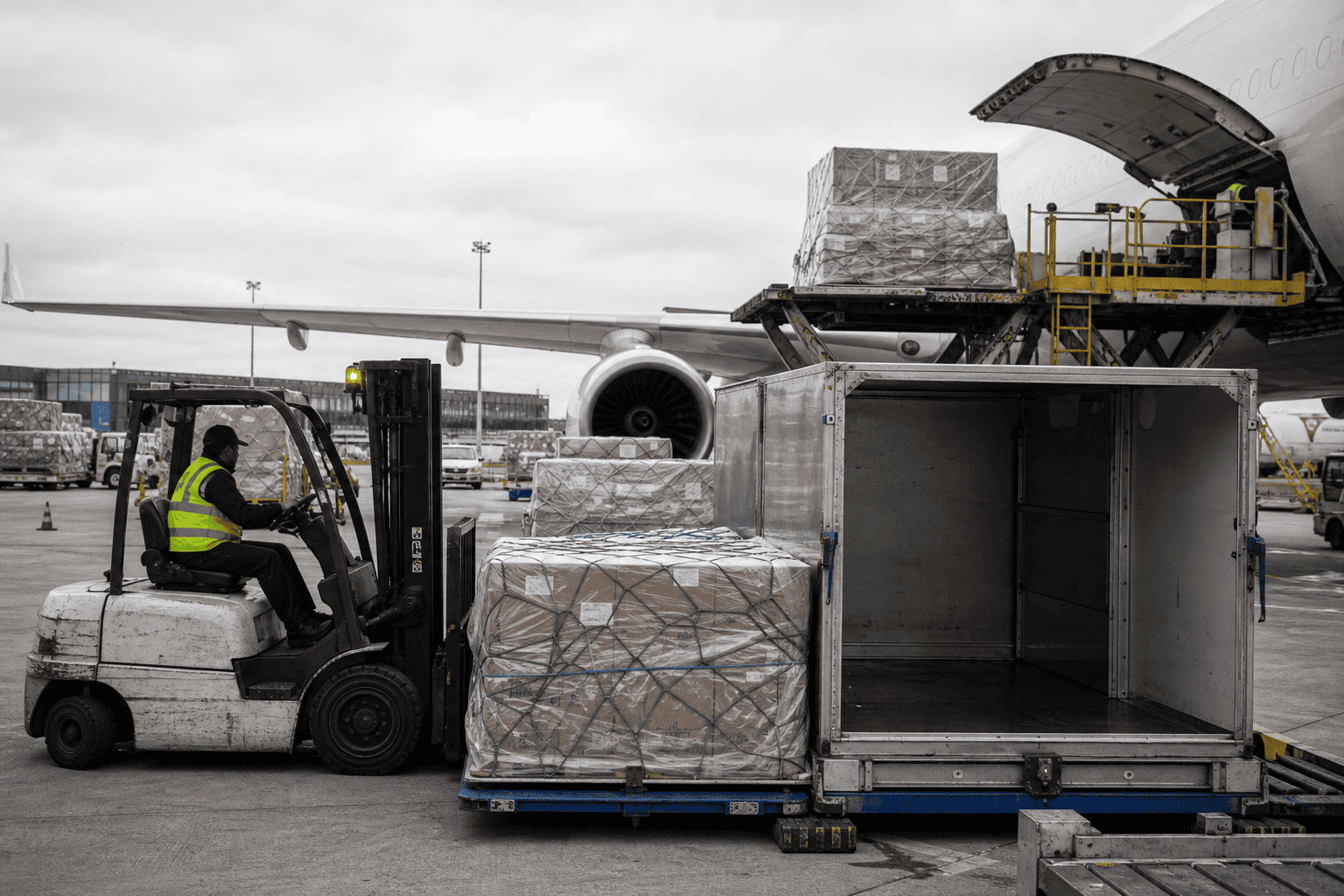
Air cargo consolidation combines shipments from several exporters into a larger airline booking. It can suit small, repeat shipments from Vietnam when the dispatch schedule fits the buyer’s deadline. The useful comparison is the total delivered cost and confirmed service scope—not a promised percentage saving or the cheapest headline rate.
How consolidation works
The forwarder receives separate consignments, checks cargo and documents, groups compatible freight and arranges the airline movement. A house air waybill usually identifies your shipment within a master air waybill booking. At destination, the receiving agent separates consignments and arranges release and onward delivery according to the agreed scope.
Consolidation does not mean your goods wait until an aircraft is full. Ask about the actual warehouse acceptance deadline, booked departure, consolidation frequency and what happens if your cargo misses the cut-off. An available quote is not confirmation that a particular flight has space.
When it fits—and when to ask for another service
| Shipment | Consolidation decision |
|---|---|
| Small, regular cartons with flexible dispatch | Compare consolidated air against individual bookings. |
| Production-line spare part with a hard deadline | Compare confirmed priority/direct routing and final delivery. |
| Batteries, chemicals or temperature-sensitive cargo | Obtain product-specific acceptance before booking. |
| Bulky, low-value goods with time available | Compare LCL sea freight on the same delivery scope. |
A slower consolidated option can be sensible when it still meets the deadline. Conversely, waiting for the next consolidation may erase a rate advantage if it triggers a stockout. Select the service after checking cargo eligibility, rather than assuming every product can join a general-cargo consolidation.
Calculate weight before comparing rates
Air freight is commonly priced on the higher of actual gross weight and volumetric weight. A commonly used airline calculation is length × width × height in centimeters ÷ 6,000, but confirm the divisor, rounding and minimum with the quoted service.
Illustrative calculation: one carton measuring 60 × 50 × 40 cm has a volumetric weight of 20 kg using that divisor. If it weighs 12 kg gross, the comparison uses 20 kg before rounding or minimum charges. Five identical cartons produce 100 kg volumetric weight and 60 kg gross weight. This is a calculation example, not an airline rate or booking offer.
Measure the packed outer dimensions, including pallets and overhang. Reducing empty packaging space may lower chargeable weight, but never weaken protection or required dangerous-goods packaging.
Compare the complete quotation
- Pickup, export customs support and origin warehouse handling.
- Airfreight basis, minimum charge, fuel/security additions and screening.
- Destination handling, agent release fees and customs brokerage.
- Delivery address, appointment costs and any remote-area charges.
- Excluded duties, taxes, insurance, storage and exceptional inspections.
Request both quotes in the same currency and on the same Incoterm and door/airport scope. Ask who invoices destination charges and whether they are fixed, estimated or payable locally. A low airport-to-airport figure can be more expensive than another offer once release and delivery are included.
Check cancellation, amendment and remeasurement rules. Keep written confirmation of the agreed chargeable weight basis and the quote’s validity; a previous shipment’s price is not a current tariff.
Compare the billed basis: using the five-carton example, a hypothetical USD 5/kg airfreight rate produces USD 500 for 100 chargeable kg, before other charges. A USD 6/kg option produces USD 600. The first option saves USD 100 on that line only; a USD 150 destination-charge difference would reverse the total-cost result. These are invented figures to demonstrate quotation comparison, not current rates. Keep minimums, service scope and delivery timing identical before choosing.
A workable weekly shipping routine
- Share a forecast and cargo-ready date before the consolidation deadline.
- Prepare consistent invoices, packing lists and consignee details.
- Send package measurements and disclose batteries or other special cargo early.
- Confirm acceptance, routing, cut-offs and destination contact before pickup.
- Track receipt, departure, arrival, customs release and delivery as separate milestones.
Run a trial shipment before moving an entire program. Record quoted versus billed cost, missed cut-offs, actual door-to-door delivery and damage or exception events. Review the pattern with the forwarder instead of judging performance from flight time alone.
Questions to ask before booking
Can the service meet our required delivery date after clearance? Is the routing direct or connecting? Who handles a missed connection? Can the consignee receive and clear the goods? Is cargo insurance included, and what does it cover? For sensitive cargo, request the actual handling arrangement; ordinary airfreight does not automatically provide continuous temperature control.
Everbest can discuss the airfreight options for your shipment. Ask for the specific consolidation schedule and acceptance conditions available on your lane; this guide does not imply that a fixed weekly service exists for every destination.
Check your next consolidation departure
Send Everbest the number of cartons, packed dimensions and gross weight, any batteries or controlled products, pickup location, destination address and weekly shipping pattern. Include the cargo-ready date and the buyer’s latest acceptable delivery date. Ask for the next feasible consolidation, confirmed acceptance deadline and an itemized airport-to-airport or door-to-door comparison. Contact Everbest.
Further reading
- Air Freight Optimization: Speed vs Cost Analysis
- Sea Freight vs Air Freight: Complete Comparison Guide
- LCL Shipping Explained: Cost-Effective Solutions for Small Shipments