
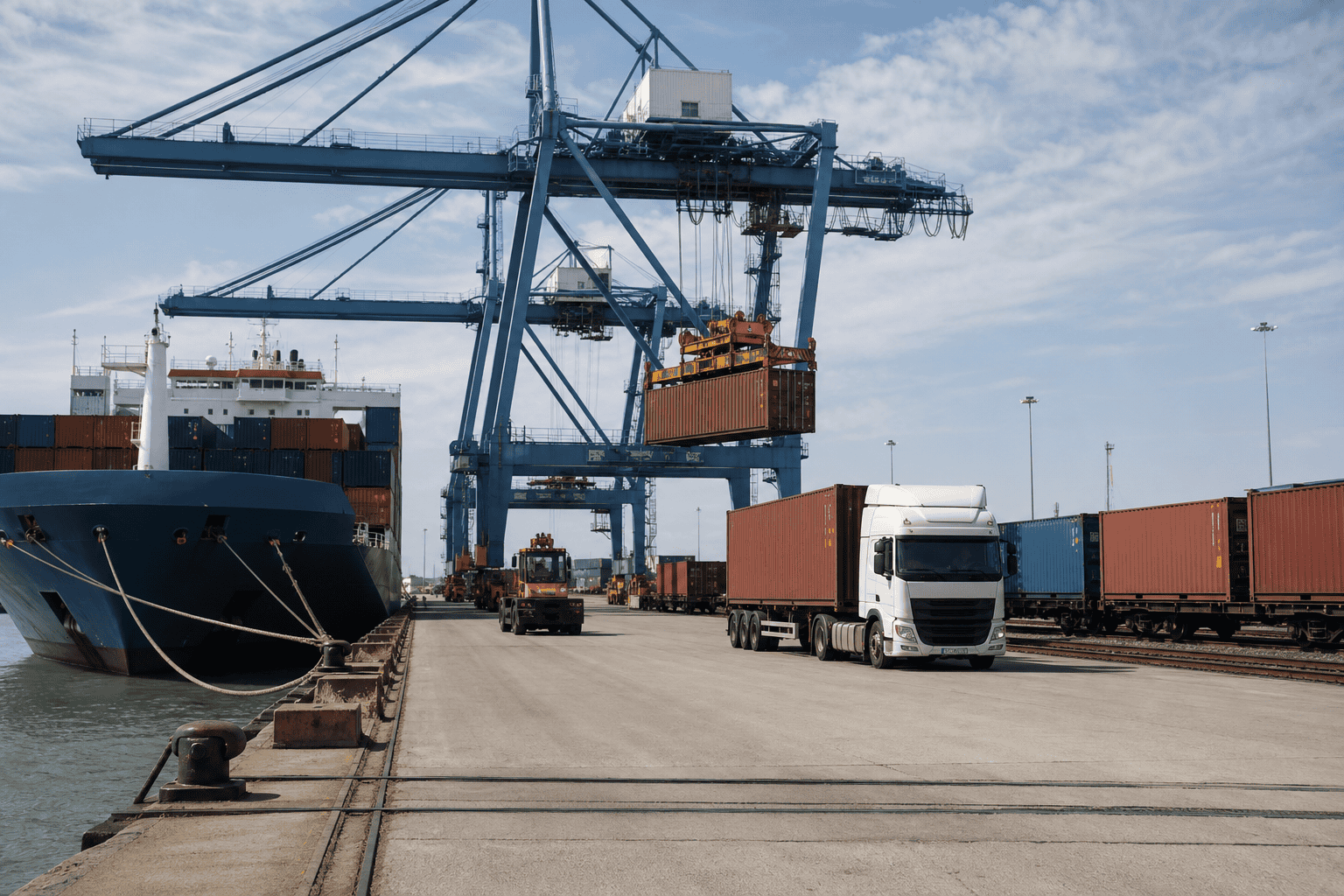
Multimodal transport combines two or more modes in one shipment journey. For Vietnam exporters, the advantage comes from a workable combination of legs—not from adding modes by default. Choose it only when the complete routing meets cargo requirements, delivery timing and total cost better than the alternatives.
Differentiate integration from a simple mode comparison
A truck-to-port-to-vessel-to-truck movement already combines modes. More elaborate combinations may include a sea-to-air transfer or a cross-border road/rail leg where an actual service is available. This article focuses on the interfaces: who receives cargo, what documents move with it and how the next leg is protected.
A through commercial arrangement can simplify coordination, but it does not remove customs procedures, cargo restrictions or all differences in legal responsibility. Confirm whether one provider contracts the full journey or you are buying separate transport contracts.
Draw the chain before asking for a rate
| At each transfer | What to confirm |
|---|---|
| Physical movement | Receiving location, equipment, cut-off and next departure |
| Documents | Transport references, customs status and required amendments |
| Responsibility | Operational owner and contractual carrier |
| Exceptions | Storage, missed connection and recovery cost |
| Visibility | Receipt evidence, departure update and escalation contact |
For a proposed hub, verify the exact terminal or warehouse and whether the product can legally and operationally transfer there. A country shown on a network map is not proof that your cargo can use a particular bonded transfer.
Compare total time and cost
Add inland pickup, main carriage, hub handling, transfer time, onward carriage, clearance and final delivery. Avoid summing only flight and vessel durations. Include any repacking, additional screening, storage, documentation and equipment-return costs.
Illustrative scenario: a sea-air proposal has a lower main-carriage price than all-air, but requires hub handling and a further acceptance check. Quote those items and allow a realistic connection window before deciding. If the resulting delivery falls outside the buyer’s deadline, the apparent saving is irrelevant. This is a decision example, not a current service offer or price.
Use the same Incoterm, endpoints, currency and package profile for every comparison. Confirm what is fixed and what depends on customs release or remeasurement.
Illustrative timing check: allow 2 days for origin pickup and handling, 12 for the sea leg, 3 for hub transfer, 1 for the air leg and 2 for release and delivery. The sum is 20 days, before any extra contingency. Comparing only the 13 days of vessel and flight movement would understate the plan by 7 days. These are hypothetical allowances, not a published Vietnam service. Ask who verifies each allowance and what happens if the hub transfer takes longer.
Keep cargo compatible with every leg
- Check dimensions, mass and handling limits for each mode.
- Disclose dangerous goods, batteries and temperature requirements at the start.
- Use packaging and securing suitable for all handovers.
- Confirm whether unpacking, re-palletizing or repacking is required.
- Check customs transit procedures and the party responsible for them.
- Verify that the destination importer is ready for the actual arrival mode.
The most restrictive leg can decide whether the routing is feasible. Cargo accepted on a vessel is not automatically eligible for a later aircraft. The CTU Code supports safe packing and securing across sea/land movements; air acceptance requires its own checks.
Assign responsibility and plan disruption
Get the contractual scope in writing: named provider, transport documents, cargo handover points and claims contact. Incoterms allocate seller/buyer obligations in the sales contract; they do not replace the transport contract or insure every transfer. Ask an insurance professional whether the policy covers the complete intended route and handling.
Agree who monitors the transfer and who can book a recovery option. Identify the latest decision point, added cost and document changes if the connection fails. A backup route must also accept the cargo; a theoretical flight is not a recovery plan.
Pilot and measure the whole movement
Begin with a shipment that can tolerate learning rather than a critical launch. Track receipt and departure at every handover, actual door-to-door time, damages, exceptions and billed cost. Reconcile transport references so staff can tell which leg a status update describes.
Review the result before moving recurring volume. Multimodal transport is useful when the interfaces work reliably enough for your needs, not because a generic guide promises fixed savings or transit times. Ask Everbest to evaluate available integrated routings and explicitly identify the providers, transfer procedures and services included for your cargo.
Ask for a complete multimodal plan
Send Everbest the factory and delivery addresses, packed cargo dimensions and weight, cargo-ready date and delivery deadline. Disclose batteries, dangerous goods and temperature limits. Ask for a leg-by-leg proposal showing transfer locations, customs responsibility, connection allowances, total charges and the party coordinating exceptions. Contact Everbest.
Further reading
- Sea Freight vs Air Freight: Complete Comparison Guide
- Optimal Shipping Routes from Vietnam: Strategic Planning Guide for Exporters
- International Shipping Risk Management: Comprehensive Framework for Vietnamese Exporters