
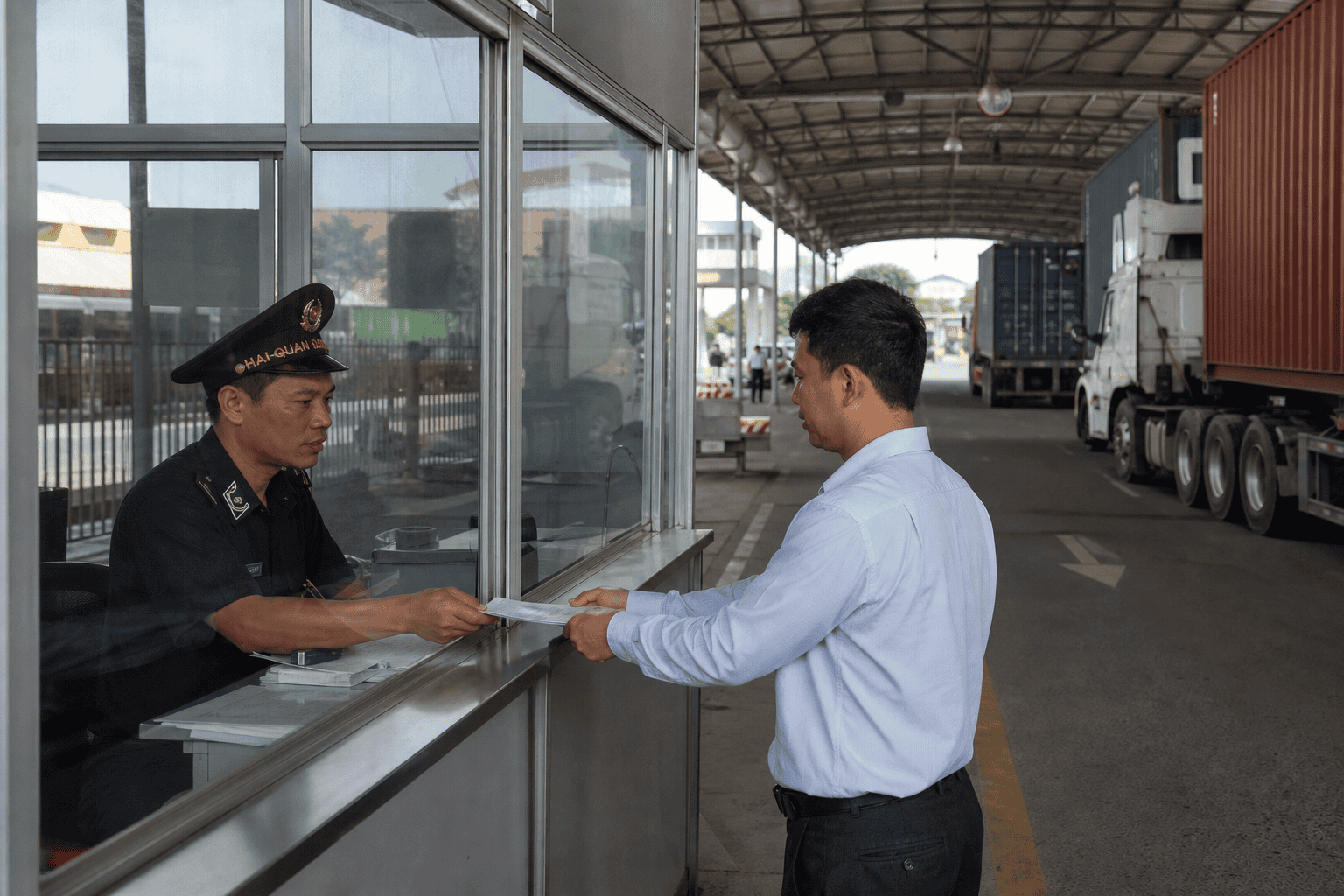
For a Vietnam import or export shipment, the safest starting point is a documented review of the product, transaction and proposed procedure. Customs clearance is not simply uploading an invoice after a truck or vessel arrives. Missing product information or an unresolved permit can affect booking, storage and delivery. Agree responsibilities with your declarant and destination parties early. Vietnam uses electronic customs processes, including VNACCS/VCIS; the applicable workflow depends on the shipment. Consult current Vietnam Customs and Vietnam Trade Information Portal guidance rather than relying on a universal promised clearance time.
Confirm the goods and customs procedure
Provide a precise description, materials, intended use, specifications and photographs or technical sheets where useful. Establish whether the shipment is a normal commercial import or export or uses another procedure, such as temporary movement or processing. Do not select a procedure because it appears cheaper without checking eligibility. Have the proposed HS classification, valuation method and origin claim reviewed against the supporting transaction. For regulated products, identify the relevant license, inspection or approval and when it must be available. Before booking, ask the declarant to identify any unresolved product or permit questions, who must answer them and the latest date for a decision.
Make the shipment documents consistent
Prepare the commercial invoice, packing information, transport references and other evidence required for the actual goods and procedure. Reconcile descriptions, quantities, units, currency, consignee and package totals across documents. Check gross and net weights and any difference between ordered and shipped quantities. If a certificate of origin is needed, verify the agreement, origin criteria and accepted evidence. For eligible AANZFTA trade, check the current accepted proof-of-origin arrangements. A certificate may use Form AANZ; Form AK belongs to a different agreement. Confirm the correct evidence with the importing-country requirements before claiming preferential treatment. A document with the right heading is insufficient if the goods do not meet the rule.
Agree the electronic filing and review process
Confirm who prepares the declaration, who approves the data and who retains the submitted version. Ensure the business has the access, authorization and digital-signature arrangements required for its workflow. Before submission, review the product, procedure, value, quantities and supporting references. Record the declaration identifier and preserve corrections with an explanation. Electronic acceptance of data is not necessarily final release of goods. Your declarant should monitor the required document review, examination or other response and explain the next action. Do not assume a previously uncomplicated shipment guarantees the same treatment next time.
Prepare for questions or examination
Keep technical evidence and original or accepted electronic documents accessible to the authorized team. If an examination is required, coordinate the location, cargo availability, handling arrangements and attendance with the provider and relevant authority. Record requests, responses and any amended information so the record remains explainable. Inform operations when an unresolved customs issue may affect terminal or warehouse timing. Do not promise a fixed inspection duration or encourage unofficial shortcuts. A planned escalation contact and accurate evidence are more useful than an unsupported “fast clearance” guarantee.
Coordinate payment, release and physical movement
Confirm assessed duties and other applicable charges with the responsible adviser, including the payment process and which party pays. Avoid applying one blanket VAT rate to all products and transactions. Verify the release and any remaining supervision or terminal requirements before arranging collection or export loading. Customs release, terminal availability and a truck appointment are related but separate events. Share the relevant references with the transport team and check the remaining cut-offs. For imports, confirm destination receiving arrangements; for exports, make sure the booking and loading plan still match the cleared shipment.
Retain an auditable shipment file
Keep the submitted declaration, supporting documents, corrections, payment evidence and release records in accordance with the applicable retention requirements confirmed for your business. Review recurring discrepancies and update the preparation checklist. Use current official contacts when checking requirements or escalating a query. This is an operational preparation guide; shipment-specific classification, valuation and legal questions require qualified review.
Assign an owner to each clearance milestone
| Check | Ask for |
|---|---|
| Before declaration | Confirm product, procedure, classification and permits. |
| Document review | Reconcile invoice, packing, value, quantities and origin evidence. |
| Review or examination | Assign response owner and arrange cargo/document availability. |
| Release and movement | Verify payment, release, terminal availability and transport cut-off. |
Related practical guides
- HS classification for Vietnam shipments: a defensible workflow
- Vietnam import and export documents: a practical checklist
- Trade compliance for Vietnamese exporters: shipment controls
Discuss your shipment with Everbest
Send Everbest the cargo description, product specifications, origin, destination, transaction type and ready date, together with the available invoice and packing information. Identify any known permit or classification question. Ask which customs tasks are included, who acts as declarant and which documents must be ready before booking. Contact Everbest.